
Name Label Template
Printable name labels for events, classrooms, offices and conferences: “Hello my name is” stickers, name badges for lanyards, fold-over desk name plates, and cubby, locker and supply labels for school. Type names in the editable Word templates or print blanks to fill in by hand at the welcome table.
- Instant download
- Editable Word & Excel
- Print-ready PDF
- 7-day refund
7 files · PDF, DOCX, XLSX
Name Label Templates
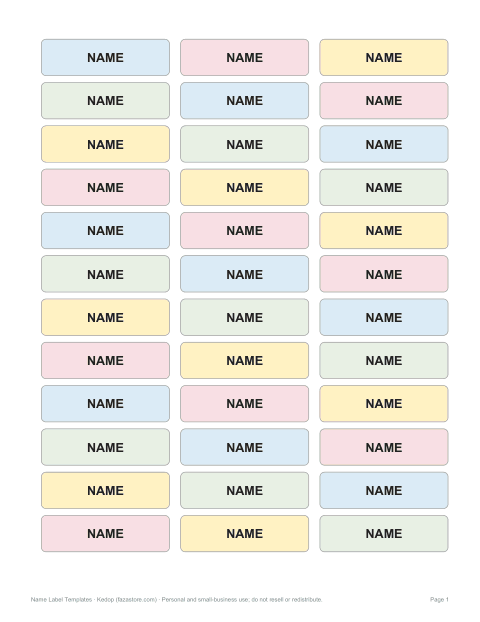
Printable “Hello my name is” stickers, colour-band name badges, classroom desk name plates, cubby and supply labels, editable Word sheets and an Excel guest list tracker.
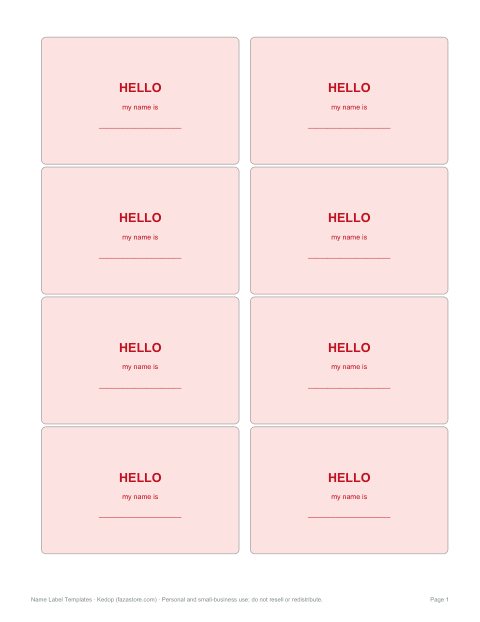
- “Hello my name is” (PDF)
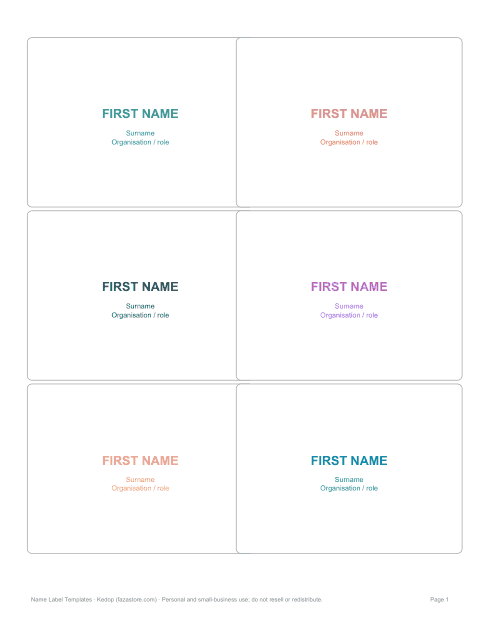
- Name badges (PDF)
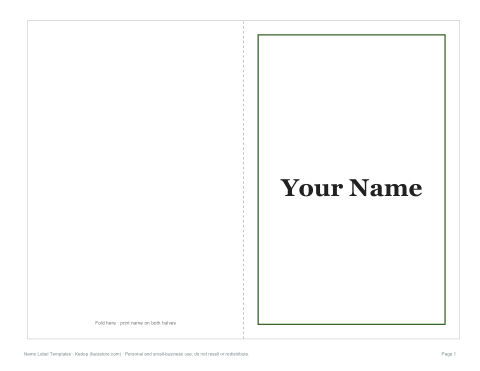
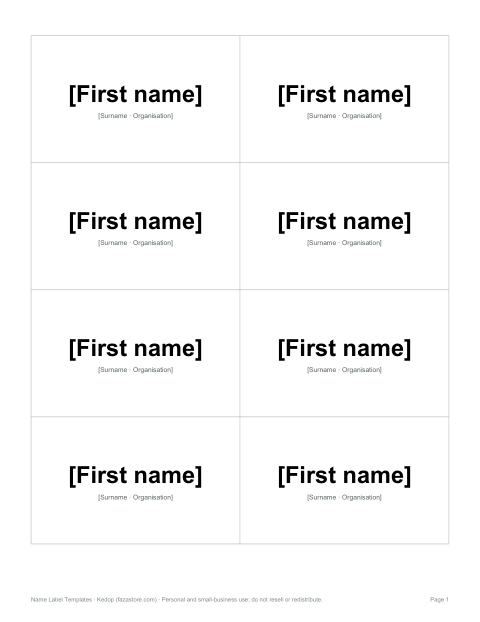
- Desk name plates (PDF)
- + 4 more
$5.00 USD, one-time 7 files · about $0.71 each
- Instant download
- 7-day refund
- Secure checkout by Stripe
7-day money-back guarantee. Full refund within 7 days of purchase, even after you download.
Free sample: Hello My Name Is Stickers (PDF, 44 KB)
Name Label Templates
Printable “Hello my name is” stickers, colour-band name badges, classroom desk name plates, cubby and supply labels, editable Word sheets and an Excel guest list tracker.
- “Hello my name is” (PDF)
- Name badges (PDF)
- Desk name plates (PDF)
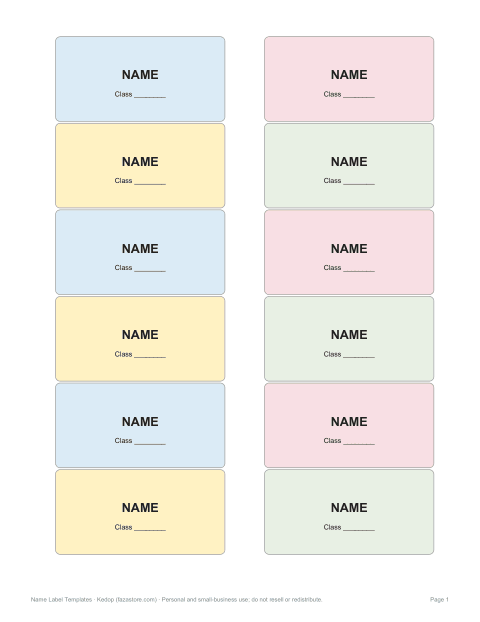
- Cubby labels (PDF)
- Supply labels (PDF)
- Editable labels (DOCX)
- Guest list (XLSX)
Formats: PDF, DOCX, XLSX. Instant download after payment (link valid 72 hours, up to 5 downloads). AI-assisted: the templates were drafted with AI help and reviewed and laid out before publishing.
$5.00 USD, one-time 7 files · about $0.71 each
- Instant download
- 7-day refund
- Secure checkout by Stripe
7-day money-back guarantee. Full refund within 7 days of purchase, even after you download.
Free sample: Hello My Name Is Stickers (PDF, 44 KB)
Full refund within 7 days — see the refund policy and license.
Free printables
Single sheets you can print right now, no sign-up. The full pack adds every sheet in one download plus the editable files.
 Printable Hello My Name Is Labels
 Printable Name Badge Labels
 Printable Desk Name Plates
 Printable Cubby Labels
 Printable Supply Labels Template
Which name label do you need?
| Label | Typical size | Used for |
|---|---|---|
| “Hello my name is” sticker | 3½ × 2¼ in or 4 × 3 in | Parties, meetups, open days |
| Badge insert | 4 × 3 in | Conferences, lanyard holders |
| Desk name plate (tent card) | 8½ × 5½ in folded | Classrooms, meetings, panels |
| Cubby / locker label | 3 × 1½ in | Schools, gyms, daycare |
| Supply label | 2 × ¾ in | Pencil cases, water bottles |
| Table place name | 3½ × 2 in folded | Dinners and weddings |
What to put on a name label
- First name large and readable from about 6 feet away.
- Surname smaller, or leave it off for privacy at public events.
- Organisation, role or table number for conferences.
- Pronouns if your event invites them.
- A coloured band or dot to show groups, dietary needs or access levels.
Designs in the pack
- Classic red “HELLO my name is” stickers.
- Colour-band name badges in six colours.
- Classroom desk name plates with alphabet strip.
- Cubby and locker labels with space for a photo or icon.
- Blank editable sheets for any event.
Printing tips
- Print stickers on full-sheet sticker paper and cut, or test alignment on plain paper before using pre-cut badge sheets.
- Print badge inserts on card (65–110 lb) so they stand up in holders.
- Use a large, bold sans-serif font for names — at least 36 pt for badges.
- For desk plates, print on card and fold along the centre line; print the name on both halves so it reads from both sides.
- Laminate classroom labels that will be used all year.
Accessibility on name badges
Use high-contrast colours (dark text on a light background), a clear sans-serif font, and a first name of at least 36 point. Avoid relying on colour alone to show roles — add a word such as “Speaker” or “Volunteer” as well. For guests with low vision, larger badges on lanyards are easier to read than small stickers on the chest.
Name labels for school
At the start of the year, label everything that can be lost or mixed up: coats, lunch boxes, water bottles, pencil cases, cubbies and books. Waterproof labels last longest on bottles and lunch boxes; iron-on or fabric labels work for clothing. A consistent format — first name and surname initial, or first name and class — keeps things tidy and makes lost property easy to return.
Running an event welcome table
Pre-print badges for registered guests in alphabetical order, keep blank badges and markers for walk-ins, and use the guest list tracker to tick off arrivals. Colour-coded badges help staff spot speakers, volunteers or VIPs. Place a small bin for returning lanyards at the exit if you reuse holders.
Worked example
A school prepares for the first week: 28 desk name plates, 28 cubby labels and 28 supply labels per class. The teacher types the class list into the Word template once, copies names into each layout, prints on card and sticker paper, and laminates the cubby labels. For the parents’ evening, blank “Hello my name is” stickers go on the welcome table.
Formats
Print-ready PDF label sheets (US Letter; A4 with “Fit to page”), editable Word templates and an Excel guest list tracker.
Frequently asked questions
What size is a name badge?
Commonly 3½ × 2¼ in for stickers and 4 × 3 in for badge inserts.
What font size should a name tag use?
At least 36 pt for the first name so it is readable from a distance.
Can I type names into the template?
Yes, use the editable Word files.
What paper should I use?
Sticker paper for stick-on labels and card stock for inserts and desk plates.
Was AI used to create the labels?
The labels were generated by script and text drafted with AI assistance, then reviewed before publishing.